


50% Smaller Footprint & Harness-Free Cabinet Design – MT Redefines Integrated Robotic Power System Architecture
From humanoid robots performing parkour and somersaults at the Spring Festival Gala to industrial robots tightening screws and handling materials on production lines, all these millimeter-level precise and flexible movements rely on robots’ core motion capability: servo control systems.
Nowadays, embodied intelligence is moving out of laboratories and onto industrial production floors, reshaping a fundamental mindset: intelligence exists not only in the "brain" (controller) but also needs to be precisely distributed across the entire mechanical body. Robot manufacturers today pursue far more than delicate mechanical structures; they demand a fundamental leap in internal motion control performance.
As robotic "bones" and "muscles" become increasingly precise, the performance ceiling of intelligent robots is determined by invisible core components such as servo systems. Embedded inside joints, these "power brains" have quietly become the key differentiator that defines robot performance generations.
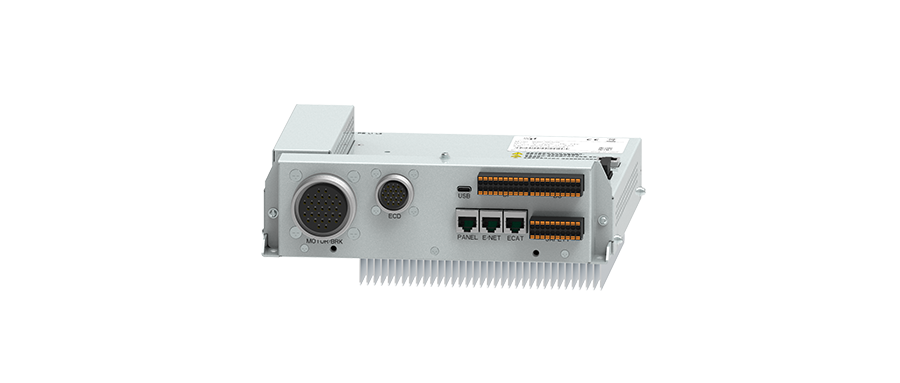
Against this backdrop, China’s domestic servo drive sector achieves an innovative breakthrough: Motong’s R910 Series dedicated integrated multi-axis servo drives for robots (hereinafter referred to as the R910 Series). This product is far more than a regular iteration — it delivers a full reconstruction of robotic power system architecture.
Five Major Performance Overhauls Restructure Motion Control Systems, Covering Spatial Layout to Precision Algorithms
As the motion nerve center of robots, servo drive systems have long been constrained by drawbacks of traditional architectures: messy internal cabinet wiring, large footprint, limited safety expandability, poor compatibility with diverse working scenarios, and more.
These pain points not only raise manufacturing and maintenance costs, but also fundamentally hinder robots’ evolution toward compactness, flexibility and intelligence.
“The longer our engineering team works on-site with clients, the clearer we grasp universal industry pain points. Robots featuring higher precision, faster speed, smaller size and superior reliability represent an irreversible industry trend, and this is the mission entrusted to Motong by our customers and the market,” said Hou Wenke, General Manager of Motong.
Backed by our mature in-house R&D system, Motong strives to break the fundamental physical constraints that limit high-end equipment performance and resolve the "impossible triangle" of product structure and performance. We continuously build technical leadership in high precision, high integration and high safety.
Hou Wenke explained: “Empowered by embodied intelligence technology, the R910 dedicated integrated multi-axis servo drive is no longer a simple unit for executing mechanical commands. It acts as an intelligent node within the robot’s perception-decision-execution closed loop, functioning as the motion control ‘cerebellum’ for embodied intelligence in the physical world. Beyond component-level optimization, it realizes a transformative overhaul of the entire system architecture.”
50% Footprint Reduction: From Crowded Cabinets to Neat, Compact Layouts
Collaborative robots, SCARA robots and hybrid robots are trending toward lightweight, miniaturized and high-density designs, imposing extremely strict dimensional limits on electrical control cabinets. Traditional multi-axis systems with discrete drives and complicated wiring often lead to cramped cabinet space and insufficient heat dissipation.
Adopting a compact integrated multi-axis design, the R910 Series delivers a leap forward in power density, cutting the overall volume by 50% under equivalent power ratings. This breakthrough optimizes space utilization and unlocks new possibilities for lightweight robot body design.
Mobile robots and collaborative manipulators can dispense with bulky control cabinets, allowing equipment deployment in narrower and more flexible spaces. It paves the way for emerging equipment forms including mobile robots and desktop precision workstations, advancing genuine mechatronic integration.
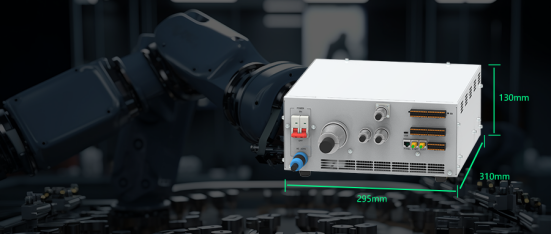
70% Fewer Connection Points: From Cable Clutter to Hardwired Architecture
Inside conventional robot electrical cabinets, cables can stretch hundreds of meters with more than one thousand connection terminals, and wiring work accounts for over 30% of total system integration time. Cable aging and poor contact trigger roughly 15%–20% of equipment failures, and tangled wiring makes system maintenance akin to navigating a maze.
Marked by its harness-free cabinet design, Motong’s R910 Series eliminates most internal cables via direct hard connections, slashing connection points by 70%. While this innovation appears to be merely simplified physical wiring, it represents a landmark practice in system reliability engineering.
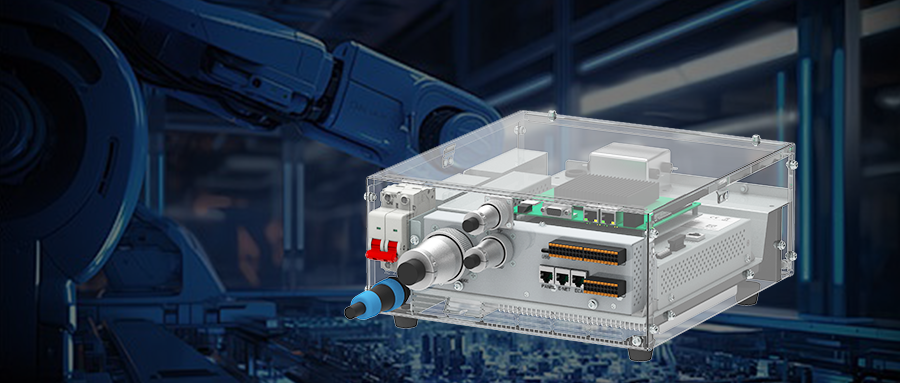
Concrete benefits include:
50% shorter installation time
85% reduction in failures caused by poor contact
Nanosecond-level signal latency
It eliminates fault sources at the root and improves long-term operational stability, while drastically cutting cabinet assembly costs and wiring labor hours, boosting cabinet assembly efficiency by up to 20 times. This delivers remarkable engineering value for system integrators and end manufacturers focused on cost reduction and efficiency improvement.
Native Built-In Safety: From Add-On Function to Inherent System Gene
With the widespread adoption of human-machine collaboration and high-risk operation scenarios, safety has evolved from a compliance option to a core requirement. The R910 Series integrates hardware-based STO (Safe Torque Off), dynamic braking, emergency stop switches and other safety functions, shortening response time to millisecond levels and reserving abundant safety circuit interfaces.
Human-machine safety no longer relies on post-installed external modules as makeshift add-ons; it is embedded natively within the drive system. This native safety architecture not only meets end customers’ accelerating demand for robot functional safety standards, but also lays a foundation for advanced safe collaborative applications of embodied intelligent robots in commercial and household scenarios in the future.
Deep Dive into Underlying Algorithms: From General Drives to Scenario-Specific Solutions
Domestic servo products have gradually caught up with international brands in general performance, yet gaps remain in high-end complex processes such as precision assembly and force-controlled polishing. Generic algorithms often fail to satisfy stringent production standards.
Based in-depth market insights, the R910 Series goes beyond hardware parameter competition. It addresses core underlying pain points including robot end vibration suppression and trajectory accuracy, and develops exclusive scenario-specific algorithms to enable precise intelligent diagnosis.
For precision assembly, force-controlled polishing and other fields, targeted algorithm optimization delivers greater practical value than minor hardware parameter upgrades. This in-depth R&D focusing on underlying algorithms marks a shift for domestic drive technology from "functional enough" to "excellent user experience", and from standardized supply to in-depth process adaptation.
Upgraded Protection Grades: From Closed Systems to Flexible Expandability
Equipped with optional I/O interfaces and modular protection upgrade solutions ranging from IP20 to IP54, the R910 Series features a highly configurable design. It lowers adaptation costs for diverse application scenarios and reflects the flexible adaptability that core components must possess amid fragmented manufacturing demands.
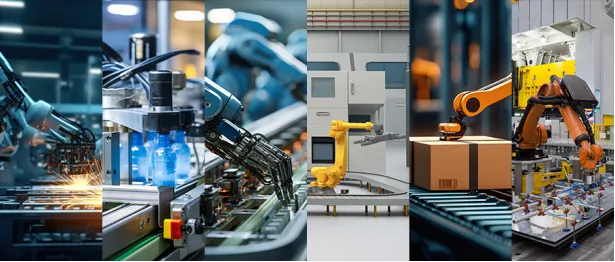
Mass High-Density Production Empowers Robot Manufacturers to Unlock High-End Applications
As industrial automation advances toward higher precision, integration and safety, the performance and compatibility of core components directly determine the operating efficiency and market competitiveness of complete robot machines. The compact high-density layout and intelligent algorithms of servo drive systems serve as the power foundation for robots’ evolution toward embodied intelligence.
As an advanced domestic manufacturer of industrial core components, Motong has nearly a decade of experience in the R&D and production of motion controllers, drives and sensors. This robot-specific servo drive addresses industry pain points with five core strengths: space optimization via high power density, enhanced reliability through harness-free design, all-round safety protection, precise empowerment via exclusive algorithms, delivering an integrated drive solution that is efficient, reliable, flexible, safe and accurate.
The R910 Series has entered mass production. Featuring intelligent, integrated and configurable design, it has gained recognition from mainstream robot manufacturers and enabled deployment across multiple scenarios including precision assembly, force-controlled polishing and human-machine collaboration.
Moving forward, MT will continue to advance technological innovation, help customers build differentiated technical barriers, and drive robots to operate seamlessly in complex dynamic environments alongside human operators to jointly create new industrial value.


