


Shrink Robots’ Motion "Cerebellum" to A4-Sized Form Factor – Breakthrough Domestic Servo Drives Enable Ultimate Integration for Industrial Robots
Core components including robot servo systems and controllers still face prominent industry bottlenecks, especially for high-end multi-axis synchronization and high-dynamic-response applications. The domestic localization rate stands below 50%, and insufficient high-end performance has become a critical roadblock limiting domestic robots from entering high-precision, high-speed and fast-response premium scenarios.
This industry contradiction reveals a profound truth: superficial industrial prosperity relies on solid underlying core technology support.
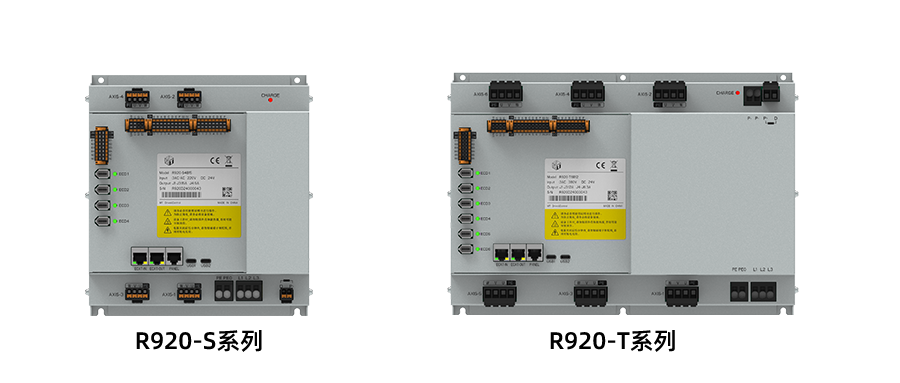
Market demand is driving technological upgrading, giving birth to Motong’s R920 Series integrated multi-axis servo drives (hereinafter referred to as the R920 Series). Directly targeting core industrial pain points and addressing key market demands, the R920 Series delivers three major leaps in performance, power density and user-friendliness through in-depth hardware reconstruction, accelerating the evolution of domestic industrial robots from "functional" to "premium-performing".
A Powerful, Compact Core Unlocks Freer Structural Evolution for Robot Bodies
How big is an A4 sheet of paper?
Even as domestic servo systems and controllers capture a sizable share of global annual sales, the entire core control unit of Motong’s six-axis integrated R920 servo drive fits perfectly within the footprint of an A4 page.
The industrial robot sector is locked in efficiency competition centered on cost reduction and quality improvement. Soaring factory land and workshop costs have made floor space utilization a critical performance metric. Traditional discrete drive layouts waste not only cabinet space but also valuable production floor area.
Boasting a compact A4-sized six-axis integrated design, the R920 enables miniaturized control cabinets and even built-in drive integration, granting designers greater flexibility in robot body design and production line layout.
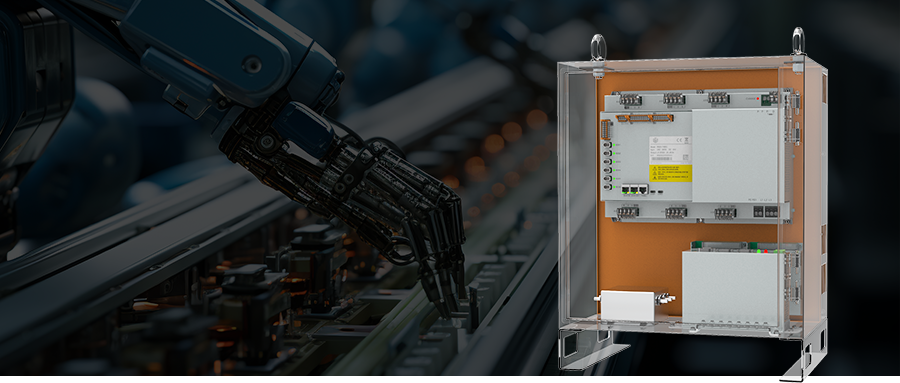
High-density integration reorganizes power devices, control cores and heat dissipation channels. Two distinctive functional designs — independent air ducts and wall-through mounting — redefine the layout logic of robot control systems. The drive can be mounted through partition walls to deliver superior heat dissipation and environmental resistance, reserving more space for core mechanical components.
This innovative servo architecture frees up valuable physical space for robot OEMs, allowing slimmer cabinets or fully embedded drive modules and unlocking the full potential of the last cubic meter on production lines.
Microsecond-Level Multi-Axis Synchronization Delivers Near-Zero Latency for High-End Applications
As intelligent manufacturing advances to deeper levels, standard industrial robots and collaborative robots are fueling new global shipment growth. Downstream applications have expanded from highly structured, standardized production lines to variable environments, non-standard tasks and frequent human-machine interaction, resulting in exponentially rising process complexity.
“This is not merely market expansion; it represents a rigorous test of core technological capabilities. Multi-axis synchronization and response speed have evolved from a bonus feature for high-end applications into an essential capability that determines whether robots can operate reliably and deliver sustained value in emerging scenarios,” said Hou Wenke, General Manager of Motong, during an interview with Gaogong Robot.
Undeterred by strict technical benchmarks targeting domestic core components, Motong rebuilt the underlying hardware architecture for the R920 Series. The six drive axes are fully integrated, with native synchronized control instructions executed at the hardware layer. This fundamentally eliminates axis deviation caused by separate computing and communication delays, meeting the stringent absolute precision requirements of premium manufacturing.
To achieve near-zero-latency coordinated multi-axis robot motion, the R920 Series is equipped with high-performance communication modules supporting 100 Mbps transmission and a minimum communication cycle of 125 μs (0.125 ms). EtherCAT bus delivers microsecond-level precise synchronization across axes, drastically improving end-effector positioning accuracy and trajectory consistency to satisfy dual demands for high speed and ultra-precision in high-end manufacturing.
Complexity Built In, Simplicity Delivered – Redefine Integration Experience with Outstanding Usability
Looking back through the evolution of industrial technology, a consistent principle emerges: world-class products absorb complexity internally while delivering simplicity to end users.
Within industrial automation, this philosophy is fully reflected in system integration and intelligent platform design. To lower integration and operation barriers, the R920 Series achieves remarkable usability through thoughtful engineering.
Simplified Commissioning
Compatible with multiple PC and network debugging tools, it features built-in parameter auto-identification. Users only need to configure a small set of core parameters for rapid commissioning, drastically shortening project delivery timelines.
Abundant Interfaces
Standard brake drive outputs and 16-channel DI/DO are included, alongside reserved safety circuit ports for emergency stop, safety gates and enable signals. Direct connection to safety hardware eliminates intermediate adapter modules and streamlines system architecture.
Low-Maintenance Design
Plug-and-play quick terminals enable disassembly without specialized tools for fast component replacement, cutting maintenance downtime and associated costs.
Multi-Robot Compatibility
Flexible power combinations cover robots with payloads ranging from 1.5 kg to 1,500 kg. It supports SCARA, Delta, four-axis palletizing, six-joint and other mechanical structures, acting as an all-in-one drive solution that helps equipment manufacturers quickly adapt to diversified market demands.
Safety: The Industry’s Fundamental Asset & Market Access Passport
According to MIIT data, newly installed industrial robots in China have accounted for over 50% of global total installations since the start of the 14th Five-Year Plan period. Robots have been deployed across 71 major industrial categories and 241 sub-categories of China’s national economy.
This marks not only expanded depth and breadth of robot adoption but also a fundamental transformation of core industrial automation operation systems — with safety as the prerequisite and core pillar of this shift.
“In my view, maximum efficiency does not stem from extreme speed or torque, but from safe, reliable collaboration. Safety is the core asset and market entry ticket for industrial businesses. Every step forward in drive power density requires two steps of advancement in safety design. The R920 Series integrates dual-layer safety philosophies within its compact form,” Hou Wenke commented.
First, all R920 models come standard with STO (Safe Torque Off), cutting torque output within microseconds to establish the primary hardware safety barrier for human-machine collaboration.
Second, 220V variants include built-in dynamic braking, while 380V units support optional external braking modules. These features prevent equipment sliding or runaway motion during power outages and fault alarms, forming a robust safety shield for human-machine cooperation and high-speed material handling.
A full range of reserved safety circuit interfaces (emergency stop, safety gates, safety enable, etc.) allow direct connection to safety hardware, simplifying system integration that complies with strict safety certification standards.
These comprehensive fail-safe designs from Motong deliver out-of-the-box safety solutions for system integrators and drastically lower market entry barriers for high-end sectors including semiconductors and automotive manufacturing.
Recalculate Total Cost of Ownership: Four Dimensions Reshape the Cost Equation
Amid emerging application scenarios and new projects, system integrators are boosting market investment while prioritizing cost reduction across the whole industry. A new consensus has formed: true total cost of ownership (TCO) equals procurement cost + installation cost + maintenance cost + space occupation cost.
Traditional servo setups consisting of multiple independent drives, extensive cables and connectors inflate upfront investment. Complex structures create maintenance challenges and pose severe risks to EMC performance and long-term reliability.
With highly integrated hardware (native built-in safety circuits, braking units and I/O ports) and streamlined commissioning functions such as auto-tuning, the R920 Series greatly reduces system integration workload. For integrators, this translates to shorter project cycles, lower labor expenditure and enhanced reliability. Though these hidden benefits are not reflected in unit pricing, they directly lift project profit margins and improve end-user experience, delivering system-level cost optimization.
In addition, pluggable quick terminals eliminate specialized tools for installation and replacement, slashing maintenance time and production downtime.
Overall, the R920 Series optimizes costs across four key dimensions:
Space cost savings: 30% smaller cabinet volume
Lower installation cost: Integrated unit and pluggable terminals cut wiring time by 40%
Optimized maintenance cost: Modular replacement reduces Mean Time To Repair (MTTR)
Improved energy efficiency: Integrated heat dissipation lowers cooling demand by 15%
Closing Remarks
Today, drive technology innovation centered on multi-axis integration addresses the most urgent efficiency, precision and reliability challenges for manufacturing end-users, while laying a foundation for the future evolution of intelligent manufacturing.
The launch of the R920 Series represents a clear alignment between market pain points and technological development routes. It is not an isolated technical breakthrough, but a targeted engineering solution born from industrial demand. Its release signals a new stage for domestic core component manufacturers: shifting from basic functional realization to performance optimization, redefining product form factors, and resolving practical application bottlenecks via systematic solutions.
The R920 Series debut coincides with a pivotal milestone where China’s industrial robot localization rate surpasses 60%. Behind rising product adoption and market share lies a paradigm shift for Chinese core component enterprises — moving from technology followers to industry definers. This integration revolution, originating within a compact footprint, will continuously empower the transformation and upgrading of China’s manufacturing industry.


